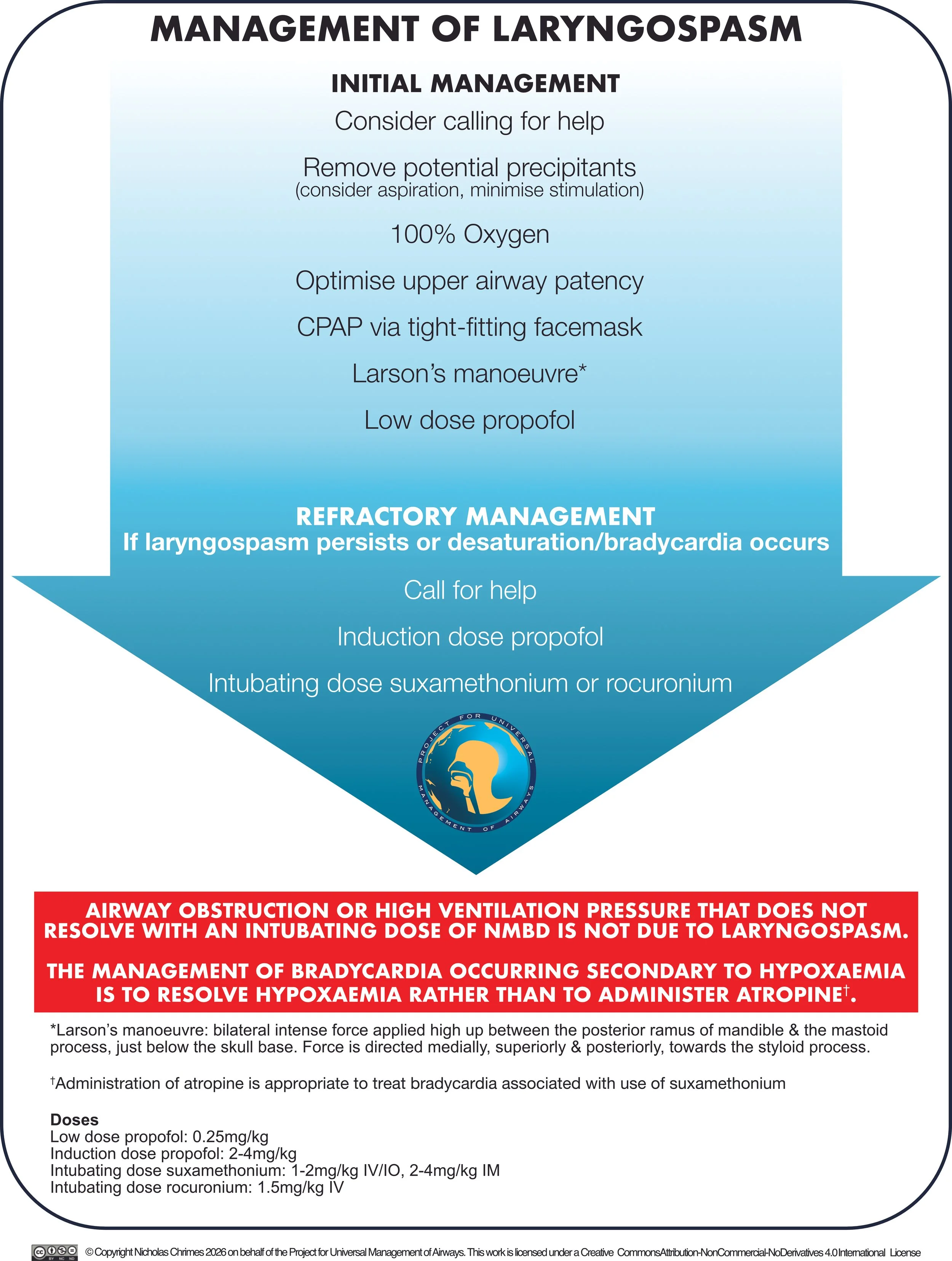

Click image to access guideline
EXTUBATION ALGORITHM
The PUMA extubation algorithm provides a crucial link between risk evaluation and formulation of an extubation strategy.
INSTRUCTIONS FOR USING THE EXTUBATION ALGORITHM
These instructions assume familiarity with the concepts described in the PUMA guideline for tracheal extubation.
Before considering use of the extubation algorithm, first ensure respiratory, haemodynamic, neurological, metabolic, surgical, resource and trajectory preconditions for extubation have been satisfied.
Once these preconditions have been met, subsequent questions prompt consideration of three key issues that must be addressed when developing an approach to extubation:
The risk that re-intubation will be challenging
The risk of hypoxaemia during airway rescue (with a facemask or supraglottic airway)
The potential for patient, team or situation risk factors to improve
These three issues are addressed by the questions arranged under columns 1, 2 and 3 respectively. Each of these questions prompts a binary decision with yes/no responses indicated by following the green or red arrows respectively.
Risk that re-intubation will be challenging (column 1)
This issue is assessed using 3 questions, starting in the top left corner of the algorithm.
Q1: Did the initial intubation indicate that re-intubation should be rapid and reliable?. To qualify as ‘rapid’ for the purpose of this determination, the projected time to re-intubate should approximate that expected for routine performance by a skilled operator. If the answer to this question is ‘NO’ the implication is not that necessarily that encountering challenges with re-intubation is probable, simply that factors have been identified that suggest the risk of this has been significantly elevated from baseline.
Answering ‘NO’ to this question might be prompted by challenges encountered at the initial tracheal intubation such as poor view, requirement for multiple tracheal intubation attempts and/or unplanned use of specialised equipment. Conversely, answering ‘YES’ to this question does not require that no challenges have been identified with intubation, only that the operator is confident that they can be readily overcome using planned interventions (e.g., use of hyperangulated videolaryngoscopy) such that they won’t impede achieving ‘airway success’. Thus this assessment legitimately involves subjective considerations that may lead two operators separately undertaking a risk evaluation on a given patient to answer the question differently based on their own skill level, or the same operator evaluating the same patient to answer differently based on alterated team or situation factors.
Q2: Since the initial intubation, could the ability to re-intubate have been significantly compromised?
Potential changes since the initial intubation are discussed in tables 2 and Box 1 of the PUMA extubation guideline. These changes influence the risk of encountering challenges with re-intubation, even if the initial intubation was rapid and reliable.
Q3: Is there a significantly increased risk that the patient will require time critical airway management following extubation? It is important to emphasise that this question refers to significantly increased risk and time critical airway management. Any patient may require re-intubation, however a significantly increased risk of re-intubation being required should prompt a more conservative approach to extubation. If re-intubation is not time critical, then a greater scope of options (including awake techniques) to reintubate are feasible, increasing the margin of safety from hypoxaemia.
Risk of hypoxaemia during airway rescue (column 2)
This refers to the risk of hypoxaemia resulting from interruptions to ventilation due to challenges with ventilation using a facemask or supraglottic airway during the process of re-intubation or a decreased safe apnoea time. It is assessed by considering the question “Are BOTH facemask and supraglottic airway ‘at risk’?”.
Facemask and supraglottic airway should be designated ‘at risk’ if they are not expected to be ‘rapid and reliable’ or if the safe apnoea time is severely reduced. The assessment of whether facemask or supraglottic airway is anticipated to be ‘rapid and reliable’ is performed according to the principles outlined in the guideline. If both supraglottic airway and mask ventilation are considered ‘at risk’ of being unsuccessful, this decreases the margin of safety from hypoxaemia by increasing the likelihood of airway obstruction. In addition, if facemask and supraglottic airway ventilation are challenging or unsuccessful, re-intubation also becomes more likely to be challenging, due to both the potential increased urgency of re-intubation and the potential for ‘composite failure’ of lifelines, necessitating a more conservative extubation strategy.
Potential for patient, team or situation risk factors to improve (column 3)
Patient factors include airway swelling, aspiration risk, safe apnoea time, degree of patient co-operation and other physiological improvements. Team factors include the number, experience and expertise of available team members and other performance modifiers such as fatigue, stress and workload. And situation factors take into consideration the environment, equipment, monitoring, processes and time of day. The practitioner should consider whether deferring extubation will significantly decrease risk, due to an improvement in one or more of these factors.
The only answer that matters to each of these questions is what the airway operator considers to be correct for a given patient, in their hands, in a particular context. The extubation algorithm is intended to be used as an implementation tool that is referred to in real time to help a given airway operator determine the best approach to their specific patient.
Having used the algorithm, the operator must consider the appropriateness of the suggested approach based on their more nuanced understanding of the relevant patient, team and situation factors. There may be legitimate reasons to adopt a more liberal or conservative approach than the algorithm suggests, but the operator should be able to articulate the specific reasons for any deviation. In general, where there is doubt a more conservative approach is advocated.
Where the suggested approach involves proceeding with extubation, decisions regarding other considerations (e.g., patient position, use of bite block, appropriate location for and duration of post-extubation care) not dictated by the algorithm should be included in the extubation strategy.
Whenever extubation is deferred, re-evaluation of any risk factors that have potentially changed during this interval should be repeated. This updated information should then be used to determine whether it is appropriate to consider extubation and the suggested approach using the algorithm.
case examples of how to use the extubation algorithm will be added soon
EXTUBATION CHECKLIST
The PUMA Extubation Checklist is used to confirm that key tasks have been completed before commencing extubation
EXTUBATION SEQUENCE
The awake extubation sequence provides a real-time prompt for executing the tasks associated with awake extubation

Extubation Checklist. To download click on image then right click on enlarged image.
Using the Extubation checklist
The extubation checklist may be used by individuals to prompt tasks during preparation for any extubation (a ‘to-do’ list), even if this is expected to be routine. However, when intubation is challenging, its use is also encouraged in a team setting, immediately prior to extubation using a ‘do-confirm’ format. In this context, once team members have having already prepared for extubation (with or without use of the extubation checklist as a prompt), confirmation that all items on the checklist have been completed should be undertaken in a team setting, using a challenge-response format, prior to commencing the extubation sequence (see below). Each item on the checklist should be read aloud by the designated team coordinator (who may be the airway operator or another team member) with the appropriate team members responding verbally as to whether it has been completed. The key to the ‘do-confirm’ format is that the checklist is not used to prompt subsequent performance of the task but rather to confirm prior performance of the task. Team members should be encouraged to speak up if concerned or unclear about any items on the checklist. In more routine cases, while verbal conduct of the checklist between the airway operator and assistant remains ideal, the same ‘do-confirm’ format can also be adopted silently by an individual operator (reading each item and checking it has been completed), to confirm readiness to proceed before commencing the extubation sequence.
TEAM
Introductions and roles: The first item is to declare a ‘focus’ situation. This highlights to those present that a critical moment is occurring requiring the team’s attention and indicates to others outside the airway team that noise levels should be minimised and conversation limited to important clinical communication. The coordinator should then identify themselves by name, discipline, seniority and ask all other team members to do likewise as the listed roles (which should have been previously allocated) are called. Team members may have more than one role as appropriate to task load and the number of practitioners available.
Support: as each category of potential support listed is read aloud, a declaration should be made as to whether:
Anyone fulfilling that role is present at the bedside or (where they are not present)
Whether they are aware that the extubation is occurring and how they would be accessed in an appropriate timeframe if needed or
That such support is not required
It must be emphasised that when seeking surgical assistance to perform neck rescue, the supporting surgeon must be skilled in performing a suitably rapid technique for establishing a neck airway in the time-critical situation of insurmountable upper airway obstruction. While a laryngologist will have this expertise, it cannot be assumed that other surgeons (even ENT surgeons who are not laryngologists) will necessarily possess it. Surgical skill in neck rescue techniques should be assessed on an individual basis. Appropriately trained airway operators from anaesthetic, intensive care, emergency medicine and prehospital backgrounds are likely to be more skilled at neck rescue techniques than even highly skilled surgeons whose scope of practice does not require them to be proficient in these procedures.
Ergonomics: each aspect listed under ergonomics should be read aloud and the adequacy of these items should be responded to by the team.
PATIENT
Monitoring: as each monitoring modality is read aloud, the team should respond as to whether that monitor is attached, the current values displayed (and any supports required to achieve these – e.g. inspired oxygen concentration or use of vasopressors). These checks should be made in real-time, not from memory. Confirmation should also be made that the values achieved are sufficiently optimised for extubation and that alarms are set are set at appropriate limits and audible. For each of the following monitoring modalities the following additional points should be confirmed:
- SpO2: tone audible & tone modulation (change of tone with change in SpO2 reading) turned on
- NIBP: confirm that it is automatically cycling and specify the frequency of reading. (when an arterial line is present, it is prudent to also confirm that the transducer height is appropriate and that the transducer is adequately secured at this height, though for brevity this item is not specified in the checklist)
Vascular access: as the prompts are read aloud the team should confirm whether adequate patency, security and accessibility of the vascular access has been checked.
‘At risk’ elements: verbal confirmation should occur that a risk evaluation has been performed, that the preconditions for considering extubation have been satisfied and that the approach to extubation has been determined following use of the extubation algorithm. It should be confirmed that any issues identified as being ‘at risk’ during the evaluation have been declared to the team. Where issues are present, further details about the risk may be expanded on at this point.
MEDICATIONS
For each category of medication verbalised, the name of the specific medication to be used should be verbalised along with whether it is available at the bedside (but still in the ampoule/vial), drawn up ready for use or has already been administered. Reversal agents may not be required in settings where neuromuscular blocking agents are not being used.
EQUIPMENT
Routine equipment: for each item of equipment read out, an appropriate team member should respond that it is available, the size/type (where relevant) and that its function has been checked (where relevant).
Optional equipment: for each item read out, an appropriate team member should respond as to whether it is available or not required. Where equipment is available the size, type, and check of function should be verbalised as for routine equipment as appropriate.
Post-extubation resources: for each category read out, an appropriate team member should respond as to whether it is available (or not required in the case of transport equipment & personnel).
STRATEGY
Intended approach: in response to verbalisation of each component of the intended approach of the extubation strategy, the team should confirm that this has already been previously communicated to them. Alternatively, while deviating from the strict ‘do-confirm’ format of the checklist, each component may instead be briefly outlined by the coordinator at this stage, if desired. Note that this represents a potential prompt to verbalise the intended approach, not to formulate the intended approach, as formulation of the airway strategy should always have already occurred prior to commencing the checklist.
Rescue approach: in response to verbalisation of each component of the rescue approach of the extubation strategy, the team should confirm that this has already been communicated to them. Again, deviating from the strict ‘do-confirm’ format, each component may instead be briefly outlined by the coordinator at this stage, if desired. Again, this represents a potential prompt to verbalise the rescue approach, not to formulate the rescue approach, as formulation of the airway strategy should always have already occurred prior to commencing the checklist.
Team feedback: at the end of the checklist the team coordinator should encourage all team members to ask any questions, share concerns or make suggestions. They should also confirm that each team member is clear and confident with their designated role(s) within the context of executing the outlined strategy. The checklist is completed by confirming that all team members are happy to proceed to the extubation sequence (see below).

Awake extubation sequence. To download click on image then right click enlarged image.
Unlike the extubation checklist which is implemented using a ‘do-confirm’ format, the awake extubation sequence (whilst also being a checklist) should be implemented using a ‘read-do’ format as it is intended to prompt real-time implementation of tasks. Whereas a ‘do-confirm’ format for executing a checklist is appropriate for confirming that preparatory tasks have been conducted prior to commencing an anticipated, familiar activity, a ‘read-do’ format, where each item on the checklist is used to prompt subsequent performance of tasks, is better suited when using a checklist to prompt real-time activities, particularly when these are unanticipated/unusual or where omission of a step may have critical consequences. The extubation sequence tool is intended to be used in this way. These distinct modes of use of these 2 checklists are crucial to their effective implementation. Teams should be trained in use of both tools in a simulated setting prior to using them clinically.
Following completion of the extubation checklist (where this has been used), the team coordinator reads each item in the extubation sequence aloud as a prompt to the appropriate team members to either perform and confirm completion of the task or declare that the task is being omitted as it is not required for this case (only relevant to those items asterisked as ‘if required’). Omitting ‘confirm recovery of neuromuscular function’ is only appropriate when neuromuscular blocking drugs are not being used. This does not refer to the circumstance where neuromuscular blocking drugs have been used but have not been administered for several hours (recovery of neuromuscular function should still be confirmed in this setting as the duration of action of neuromuscular blocking drugs can be unpredictable), only to the circumstance where they were not administered at all or when they have not been administered for a sufficiently prolonged period to ensure their elimination in a particular patient (e.g. in ICU).
AIRWAY EXCHANGE CATHETERS
USING An AIRWAY EXCHANGE CATHETER

User guide for airway exchange catheters (AECs). To download click on image then right click on enlarged image.
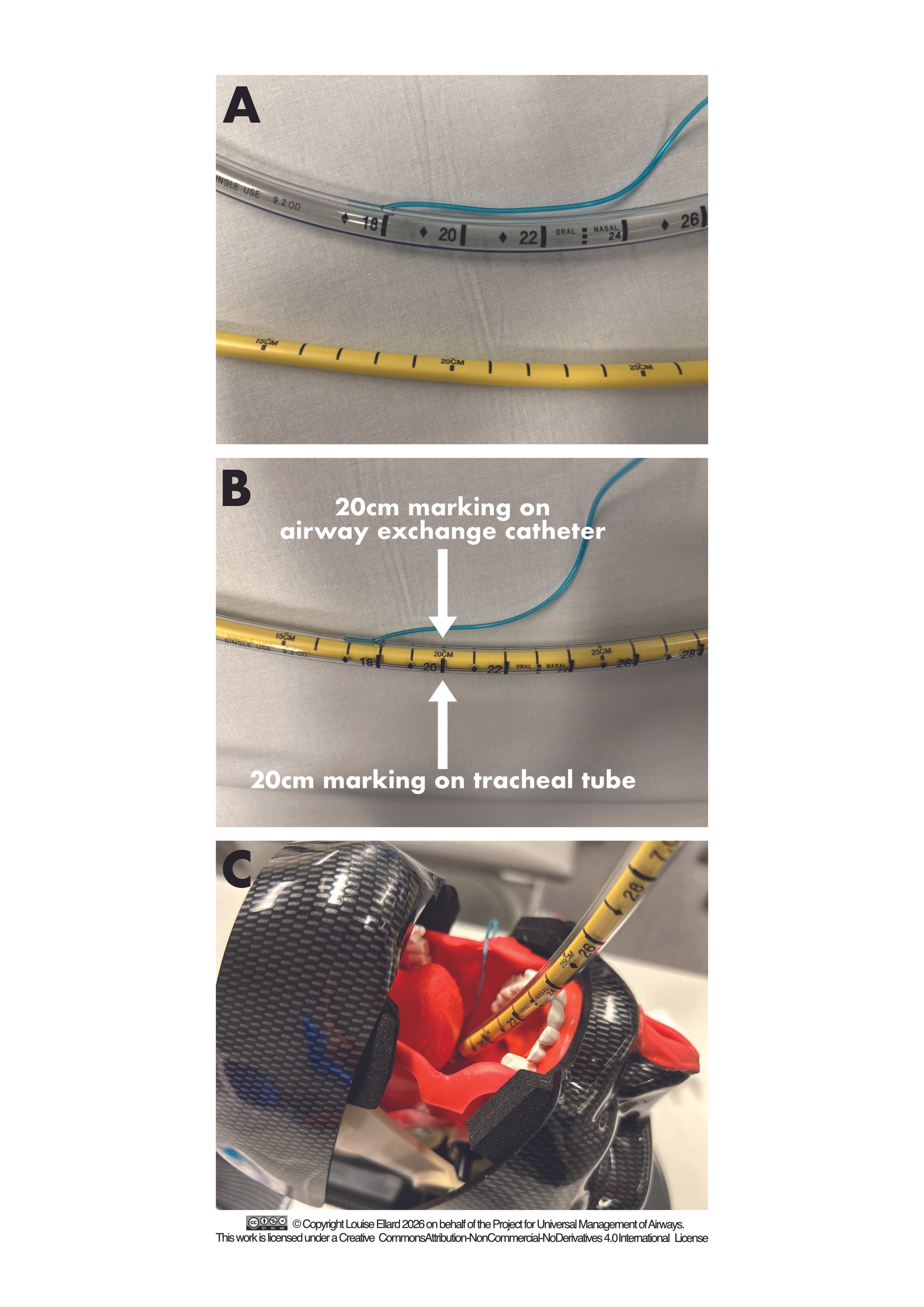
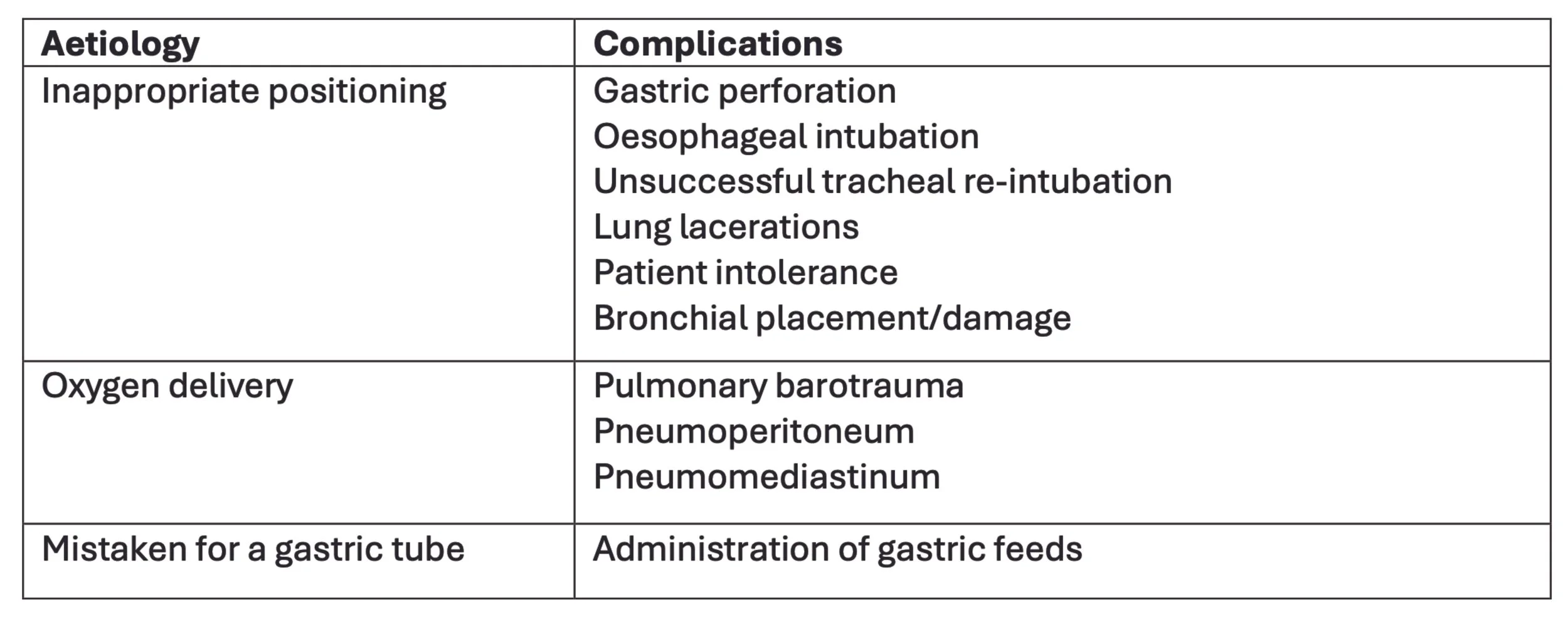
Distance markings on airway exchange catheter and tracheal tube.
A) Tracheal tube (above) and airway exchange catheter (below) showing distance markings.
B) Airway exchange catheter inserted into tracheal tube with distance markings aligned.
C) Airway exchange catheter inside tracheal tube with distance markings aligned and measured at teeth in manikin airway.
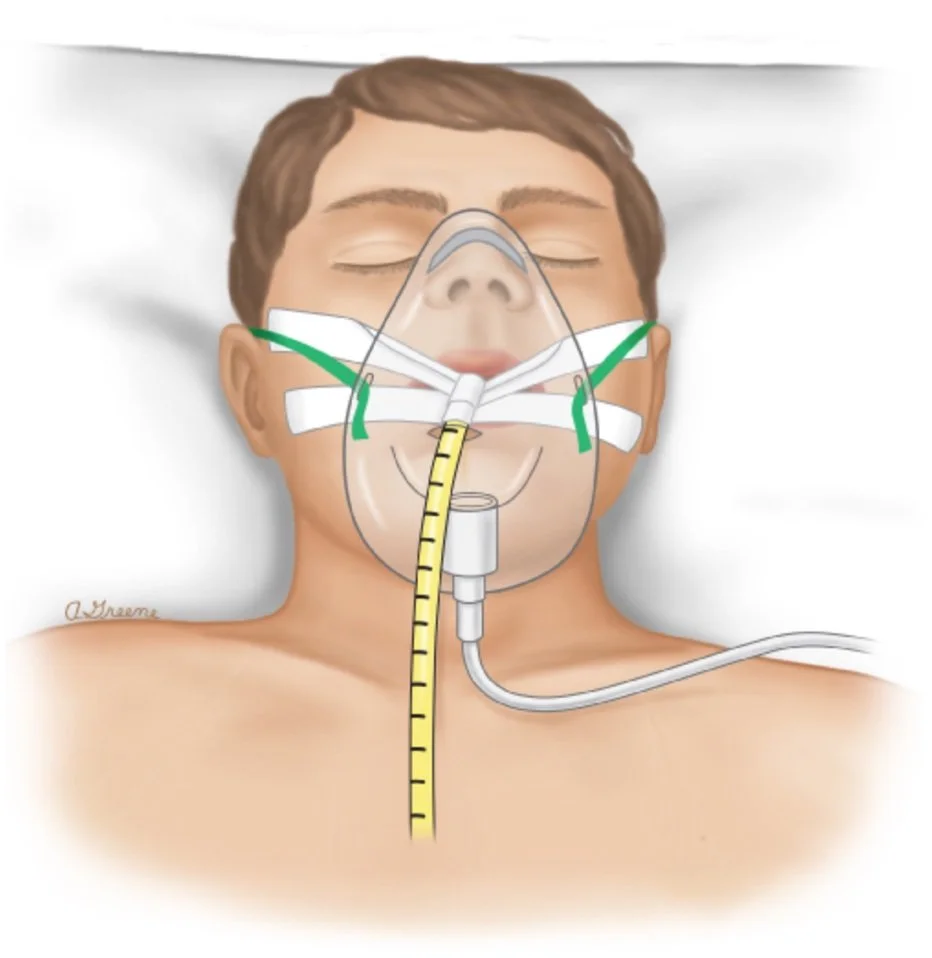
Four-point fixation of airway exchange catheter
Reproduced with permission from Parotto M, Ellard L. Extubation following anesthesia. In: UpToDate, Connor RF (Ed) Wolters Kluwer. (Accessed on April 15, 2026) Copyright © 2026 UpTo Date, Inc and/or its affiliates. All rights reserved